
Warm Safe Place
Family memory and emotional weight.
Leandro Pareja | ENC 1102 | Section 014 11520
A multimodal portfolio about the songs, objects, and algorithms that help shape how I understand and present myself.
Home Page
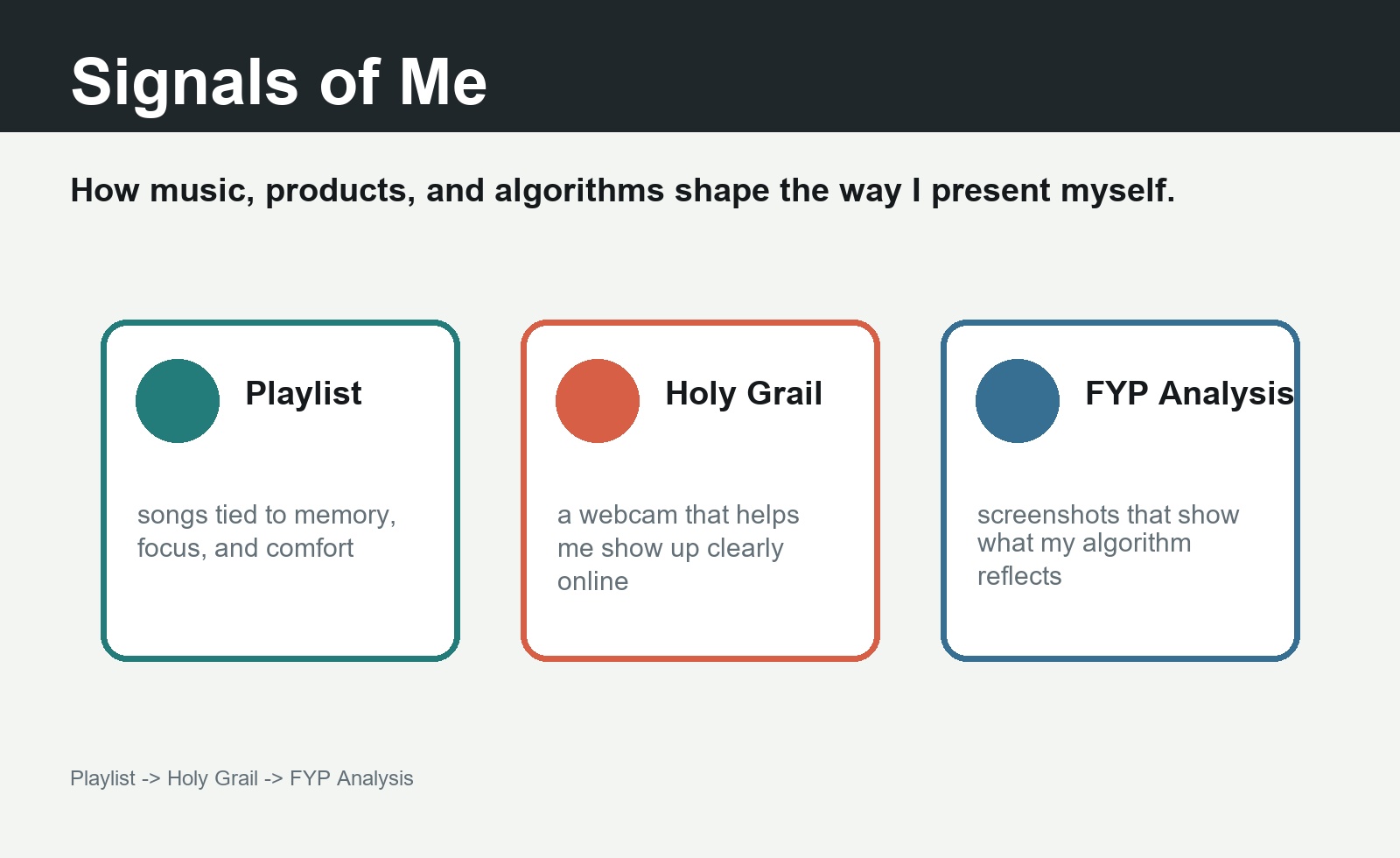
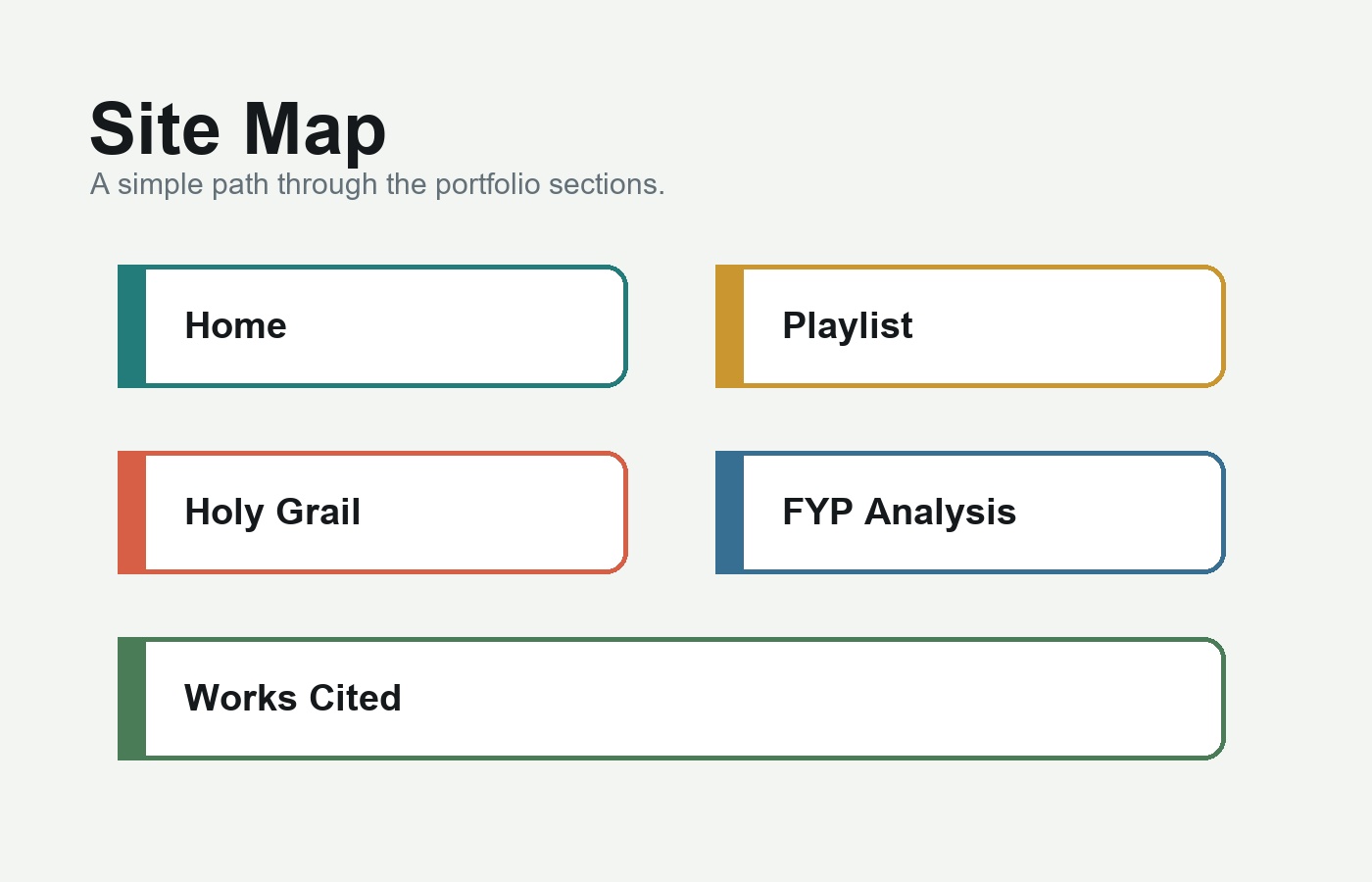
This portfolio brings together three projects from the course: a personal playlist, a Holy Grail item video, and an FYP algorithm analysis. Each section uses writing, images, video, and design to show a different piece of my identity.
Playlist
These five songs each show a different side of me: family, confidence, focus, private feelings, and the songs I go back to when I need comfort.
Family memory and emotional weight.
Confidence and walking-in energy.
Focus for exams, papers, and late nights.

Private regret and unsaid words.
Comfort when nothing else sounds right.
My brother was the one who put me on to Staind. I remember hearing the album through the wall when I was younger, before I really knew what the songs were saying. Later, when I listened to "Warm Safe Place" clearly, I understood why it stuck with him. The song feels like wanting peace when family life is loud or tense. For me, it is tied to my brother, my house, and the way music can explain feelings people do not always say out loud.
If there was a song playing as I walked into a room, this would be it. It feels confident without being too much. The beat moves, the sample is smooth, and the whole song has this easy energy that fits how I want to come across. It is not about trying to be the loudest person in the room. It is more about walking in already comfortable with yourself.
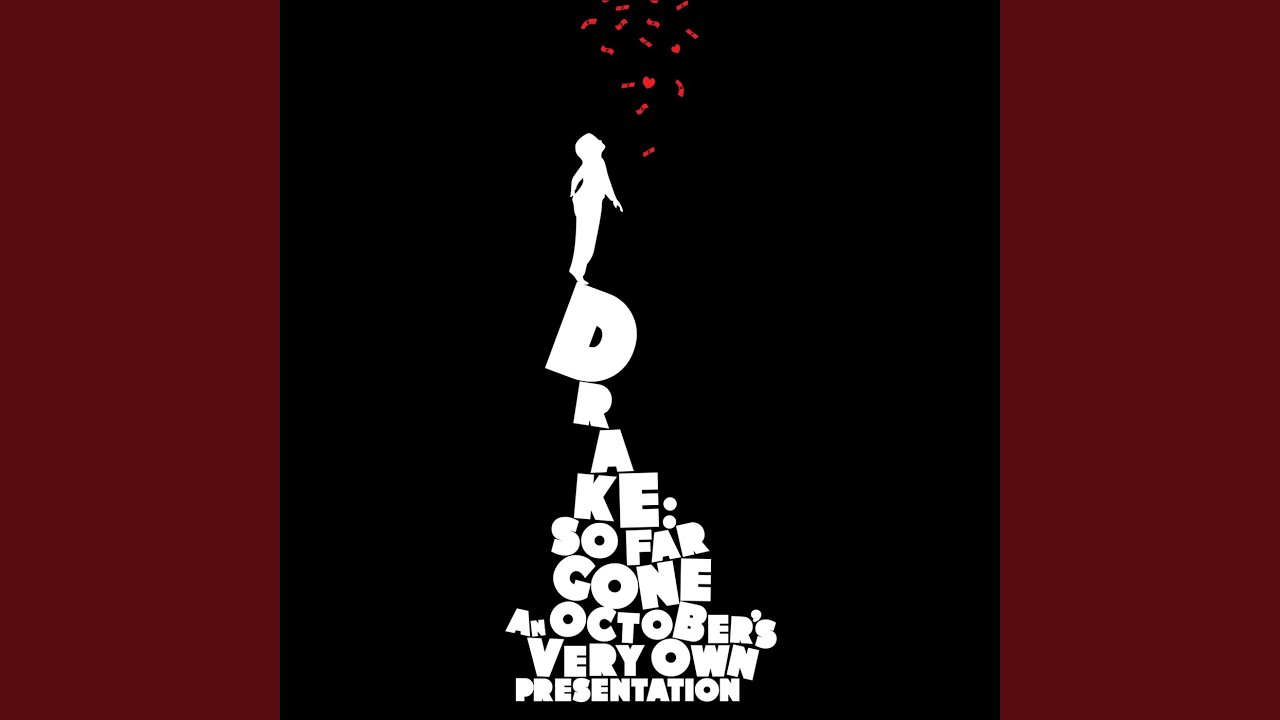
This is my lock-in song. I have played it during exams, papers, and late nights when I needed to stop wasting time and actually work. The beat is steady, Drake's delivery is calm, and the song has enough bounce to keep me moving without pulling my attention away. It is not a deep emotional song for me. It is the song that gets me to sit down and finish what I need to finish.
This is one of the songs I do not usually bring up because it feels more private. It reminds me of times when I knew what I should have said, but only after the moment was already gone. The song is quiet and simple, which makes it hit harder. It connects to the part of me that overthinks, remembers things too long, and sometimes keeps feelings to myself.
Some days nothing sounds right except this song. It is slow, hazy, and comforting in a way that does not force me to feel better immediately. I listen to it when I do not need a song to solve anything. I just need something that matches the mood. That matters because identity is not only confidence or ambition. It is also the songs that help you get through quieter days.
Clarion. "Hello Juliet." YouTube, 2024, www.youtube.com/watch?v=yfgfYfS4XBo.
Drake. "Best I Ever Had." So Far Gone, Young Money/Cash Money, 2009, www.youtube.com/watch?v=Zfp3KfYH0xA.
"Best I Ever Had." Songfacts, www.songfacts.com/facts/drake/best-i-ever-had.
"Just the Way You Are (Milky Song)." Wikipedia, Wikimedia Foundation, 2026, en.wikipedia.org/wiki/Just_the_Way_You_Are_(Milky_song).
"Love You Anyway." The Marias Wiki, Fandom, marias.fandom.com/wiki/Love_You_Anyway.
Milky and Mall Grab. "Just the Way You Are." Ministry of Sound Recordings, 2026, www.youtube.com/watch?v=mfjgrH1fx4c.
Staind. "Warm Safe Place." Break the Cycle, Flip/Elektra, 2001, www.youtube.com/watch?v=_g08VVrJdtc.
"Staind: Warm Safe Place." Songfacts, www.songfacts.com/facts/staind/safe-place.
The Marias. "Love You Anyway." Submarine, Atlantic Records, 2024, www.youtube.com/watch?v=KyAST3a5e0o.
Holy Grail Video
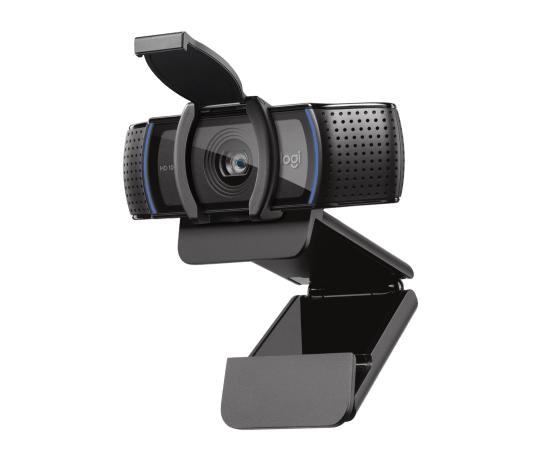
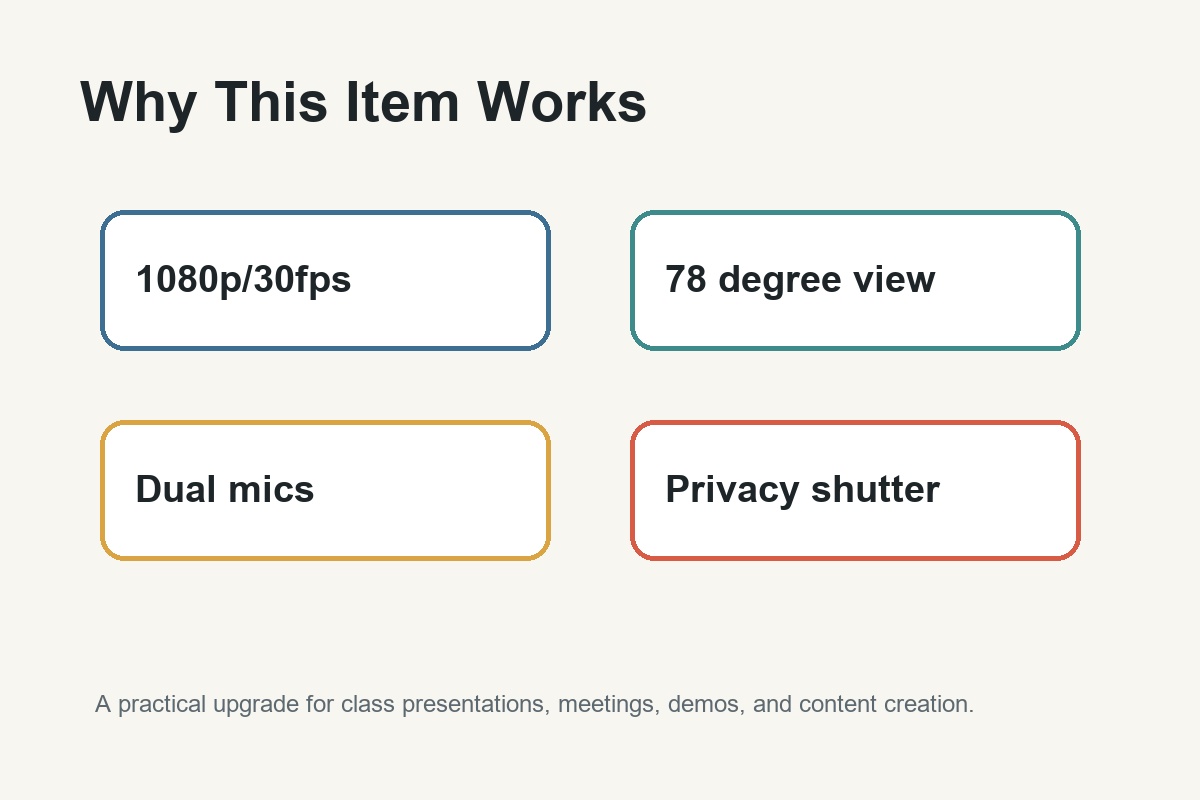
My holy grail item is the Logitech C920s Pro HD Webcam because it is one of those simple upgrades that makes online school, meetings, and recordings feel way more put together.
A holy grail item should solve a real problem better than the basic options around it. The Logitech C920s does that for me because it makes a regular online setup look clearer without needing a complicated camera setup. For class presentations, calls, recordings, or any situation where I need to be on camera, image quality affects how prepared I seem. A blurry laptop camera can make a good presentation look weaker than it actually is.
What makes the C920s valuable is that it gives me more control over how I show up online. When I am recording something or joining a meeting, I do not want to think about whether the camera looks bad. I want the tech to do its job and get out of the way. That is why this webcam works as my holy grail item: it is practical, reliable, and connected to the way I present myself digitally.
Logitech. "C920s Pro HD Webcam." Logitech, www.logitech.com/en-us/shop/p/c920s-pro-hd-webcam.960-001257.
FYP / Algorithm Analysis
My TikTok For You Page does not show every part of my life, but it does reflect the parts I interact with the most: humor, college content, budget-conscious ads, and gaming.
Every time I open TikTok, my For You Page already feels personal. It does not feel random, and after collecting screenshots from my feed, it was pretty clear why. The same types of content kept showing up: memes, comedy skits, gaming clips, FAU-related posts, and ads for cheaper tech. Taken together, my FYP works like a mirror. It reflects what I watch, what makes me laugh, and what stage of life I am in right now.
The biggest pattern was humor. A lot of my feed was made up of jokes, reaction clips, and random relatable videos. That makes sense because those are the videos I actually stop on, rewatch, or send to people. Nora McDonald explains that recommendation systems can start to reflect the identities users keep engaging with. In my case, the algorithm seems to understand that humor is one of the main ways I connect with content.
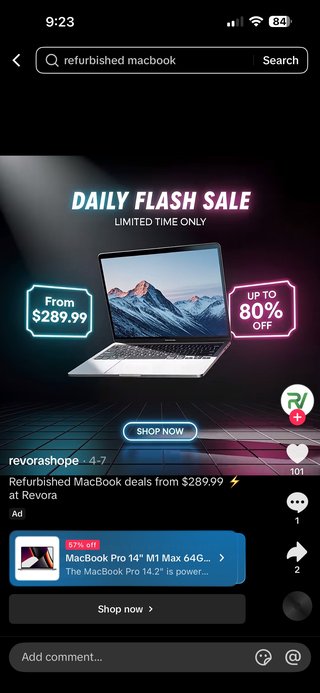
The ads also said a lot. Instead of luxury products or things aimed at older adults, I kept seeing deals for tech, like a refurbished MacBook ad starting at $289.99. That kind of ad fits a college student who wants useful tech but is still thinking about price. The algorithm did not need me to tell it that directly. It built that idea from my behavior.
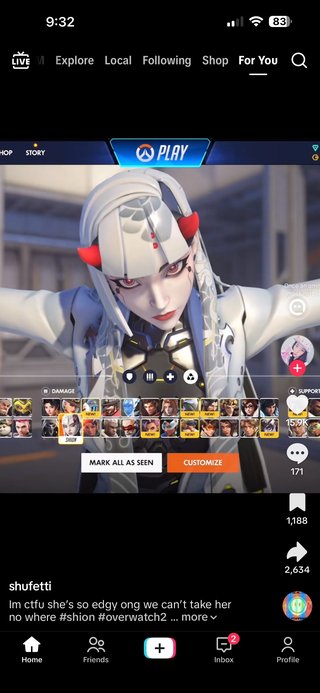
The mirror effect felt even more real when my FYP showed a video about FAU. That was not just generic college content. It connected to my actual school, which made the feed feel weirdly specific. My FYP also picked up on gaming through Overwatch 2 clips. At the same time, it misses parts of me too. It does not really show my interest in data projects or school goals because those parts of my life do not create the same quick reactions as a funny video or game clip. So the mirror is accurate, but it is still selective.




In my most recent FYP view, the algorithm still reflects the same basic version of me, but the balance of content has shifted. My original essay focused mostly on humor, budget tech ads, FAU-specific posts, and gaming. The newer view leans more heavily into entertainment communities, especially anime edits, gym or fitness-related videos, random lifestyle clips, and niche memes. This does not completely contradict my original argument that the FYP acts like a mirror, but it does make the mirror look more layered. Instead of only reflecting my current school life and sense of humor, the new feed shows how quickly TikTok can adjust its version of me based on small behavior changes, like pausing on a character edit, watching a fitness clip all the way through, or replaying a random joke.
This change would make me expand my original essay rather than fully revise it. I still believe the algorithm reflects real parts of my identity, but I would now emphasize that the reflection is unstable and constantly being updated. It does not capture one final version of me. It captures the version of me that is most visible through my recent behavior. If I spend more time watching anime content, the app pushes me deeper into that community. If I stop on gym videos, it starts treating fitness as a bigger part of my profile. The newer FYP also reminds me that the algorithm often favors the parts of my identity that produce quick engagement. Humor, anime, fitness, and gaming are easy for TikTok to detect because they are visual, repeatable, and tied to watch time. More private parts of my life, like school goals, family, or personal routines, still do not appear as much. So the algorithm is a mirror, but it is a selective one. It reflects what I perform through attention, not everything I actually am.
Center for Humane Technology. "How Social Media Hacks Our Brains." Center for Humane Technology, www.humanetech.com/brain-science. Accessed 15 June 2026.
McDonald, Nora. "Teens See Social Media Algorithms as Accurate Reflections of Themselves, Study Finds." The Conversation, 29 Apr. 2024, theconversation.com/teens-see-social-media-algorithms-as-accurate-reflections-of-themselves-study-finds-226302.
TikTok. Screenshots from personal For You Page. Collected June 2026.